


The Rise of Green Logistics: Sustainable Packaging for Bali Exports – The global trade landscape is changing. Ten years ago, buyers rarely asked about the environmental impact of a shipping crate. Today, it is often the first question they ask. For businesses in Indonesia, adopting sustainable logistics bali practices is no longer just a marketing tactic. It has become a fundamental requirement for accessing premium markets in Europe, North America, and Australia.
This shift is driven by two powerful forces: stricter international regulations and a growing consumer demand for ethical products. If you export handicrafts, furniture, or stone statues from Bali, your packaging must now tell a story of responsibility. This article explores the practical side of green logistics, from the wood we use in our crates to the way we consolidate shipments to reduce carbon emissions.
Why Sustainable Logistics Bali Matters Now
The days of using cheap, uncertified timber and excessive plastic wrap are ending. Governments worldwide are enforcing laws that penalize environmental negligence. For example, the European Union has introduced rigorous standards like the EU Deforestation Regulation (EUDR). This rule requires proof that wood products do not contribute to forest degradation. If your packaging cannot pass this test, your goods might not clear customs.
Furthermore, sustainable logistics bali is about efficiency. Green packaging often means lighter packaging. In the world of freight, weight equals fuel, and fuel equals cost. By switching to smarter, eco-friendly materials, exporters can often lower their shipping bills while reducing their carbon footprint. It is a practical approach that protects both the planet and your profit margins.
The Albasia Wood Advantage
One of the biggest success stories in green shipping solutions comes from a local source: Albasia wood (Albizia chinensis), often known locally as Sengon.
In the past, heavy hardwoods were often used for crating. These trees take decades to mature. In contrast, Albasia is a fast-growing softwood species. Farmers in Indonesia cultivate it in sustainable plantations where trees reach harvestable size in just five to seven years. This rapid cycle makes Albasia a truly renewable resource.
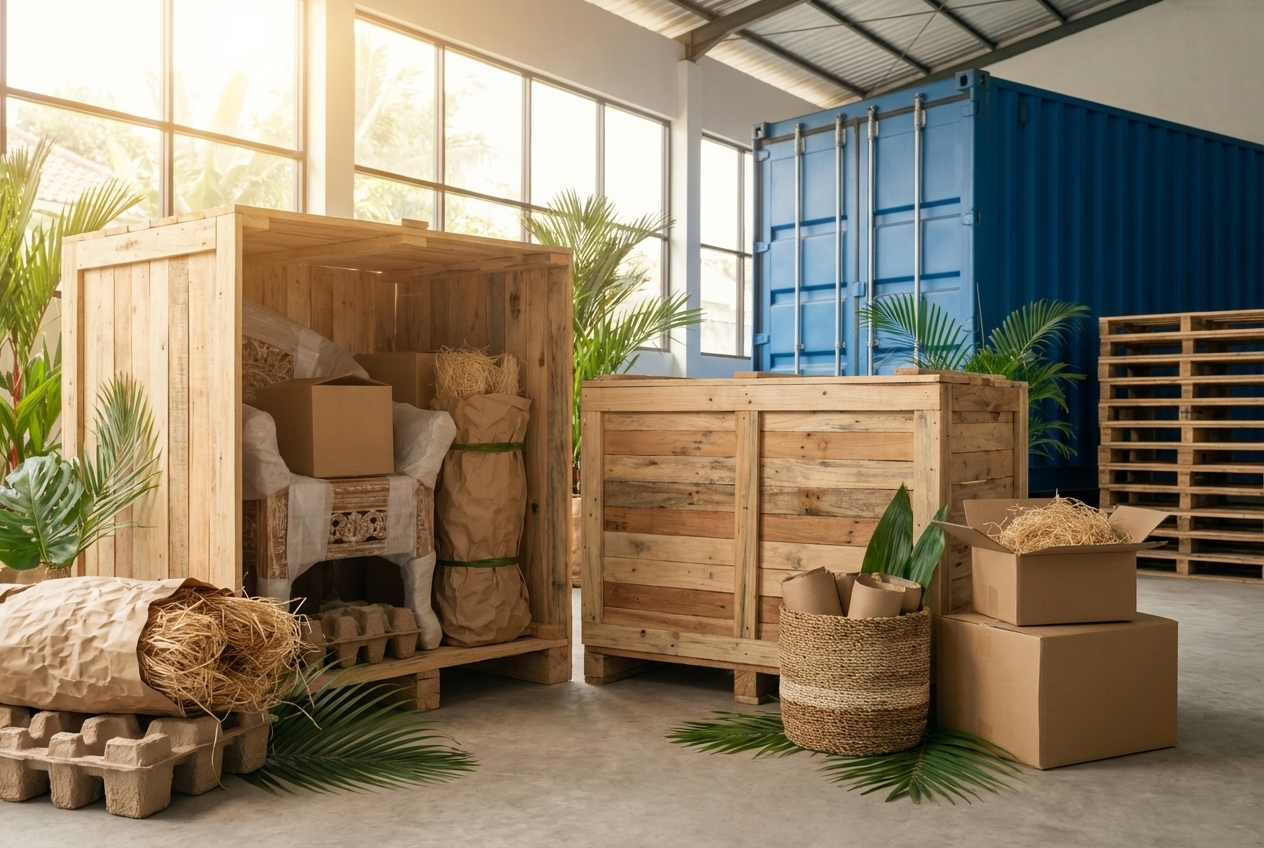
From a logistics perspective, Albasia is superior for air freight and LCL (Less than Container Load) shipments because it is incredibly lightweight. A crate made of Albasia weighs significantly less than one made of Meranti or Teak. This reduction in gross weight lowers fuel consumption during transport. When we build crates at Sejati Cargo, we prioritize these renewable materials to ensure your bali shipping cargo remains compliant and cost-effective.
Innovation in Cushioning: Honeycomb Paper vs. Bubble Wrap
For decades, bubble wrap was the standard for protecting fragile items like ceramics and glass. However, plastic waste is a major global issue, and many countries are banning or taxing single-use plastics.
The industry is shifting toward honeycomb paper. This is a kraft paper material cut with a geometric pattern. When you pull it, it expands into a 3D honeycomb structure. This structure provides excellent shock absorption, trapping air to cushion the impact just like plastic bubbles do.
The difference is in the disposal. Honeycomb paper is 100% biodegradable and recyclable. It creates a premium unboxing experience for the customer, who can simply put the packaging in their recycling bin instead of dealing with piles of plastic waste. For eco friendly export packing, this material is a clear winner.
Biodegradable Fillers
Another challenge in eco friendly export packing is void fill—the material used to fill empty spaces in a box so items don’t shift. Styrofoam peanuts are notorious for polluting the environment. They take centuries to decompose.
We are seeing a rise in starch-based packing peanuts. Made from cassava or corn starch, these fillers dissolve in water. They offer the same protection as Styrofoam but leave zero toxic residue. Using these materials prevents your shipment from becoming a disposal burden for your buyer.
Regulatory Compliance: ISPM 15 and Timber Legality
Sustainability is also about following the law. International trade requires strict adherence to phytosanitary (plant health) standards.
ISPM 15 (International Standards for Phytosanitary Measures No. 15) is the global rule for wood packaging. It aims to prevent the spread of timber pests. To comply, wood must be treated. Historically, many providers used Methyl Bromide (MB) fumigation. However, Methyl Bromide is a chemical that damages the ozone layer.
The sustainable alternative is Heat Treatment (HT). This process involves heating the wood core to 56 degrees Celsius for 30 minutes. It kills pests without using toxic chemicals. At Sejati Cargo, we ensure our wooden crates use Heat Treated wood marked with the ISPM 15 stamp. This method satisfies strict biosecurity rules in Australia and the USA without harming the atmosphere.
Additionally, Indonesia’s SVLK (Sistem Verifikasi Legalitas Kayu) certification ensures that the timber used is legal. This chain-of-custody verification is crucial for entering markets like the EU. It proves that the wood in your crate did not come from illegal logging.
Efficiency as a Green Strategy: LCL Consolidation
Sustainability isn’t just about materials; it is about how we move them. Sending a half-empty shipping container is wasteful. It burns the same amount of fuel to move less product.
This is where bali shipping cargo consolidation becomes a powerful tool for sustainability. Our Less than Container Load (LCL) service allows multiple small exporters to share space in a single container. By maximizing the load factor of every container, we reduce the carbon emissions assigned to each individual item.
Consolidation allows small businesses to access green shipping solutions that would otherwise be out of reach. Instead of booking expensive and carbon-intensive air freight for small orders, you can use sea freight consolidation. It takes longer, but the environmental impact is a fraction of flying goods across the world.
How Sejati Cargo Supports Your Green Goals
Navigating these options can be confusing. You need a partner who understands the intersection of logistics, regulations, and sustainability.
At Sejati Cargo, we help you build a supply chain that respects the environment. We assist in sourcing the right packaging materials, from Albasia crates to biodegradable wrapping. We manage the complex documentation for SVLK and ISPM 15 compliance, ensuring your Bali shipping cargo doesn’t get rejected at the destination port due to environmental non-compliance.
Our warehouse team is trained to pack efficiently. We minimize waste by custom-building crates to fit your specific items, reducing the amount of void fill needed. We also calculate the best way to stack and load containers to ensure no space is wasted.
Ready to make your supply chain greener? Contact Sejati Cargo today. Let us handle the sustainable logistics Bali so you can focus on creating beautiful products for the world.